When Brands Laugh at Themselves (And Win): What BBB and Levi’s Just Taught Us About Trust
- 5 hours ago
- 7 min read
There's a special kind of marketing magic that happens when a brand stops taking itself so seriously.
Not the kind where they're trying too hard to be funny on Twitter. Not the kind where some intern posts a meme that makes the whole C-suite sweat. We're talking about the kind where a brand looks at a situation that could be embarrassing — and instead of running from it, they lean all the way in.
This week, two massive brands did exactly that. And the internet loved them for it.
Bed Bath & Beyond launched the “Legendary Coupon Hunt” — a nationwide treasure hunt for the oldest surviving 20% off coupon in America. And Levi’s turned a FIFA-mandated logo cover-up into the most talked-about marketing move of 2026.
Both plays are different. But the underlying strategy is identical: be human, be self-aware, and make people feel something.
Let’s break down what happened, why it worked, and what every local business should be taking notes on.
Bed Bath & Beyond: The Coupon That Wouldn’t Die
If you’ve ever cleaned out a junk drawer, a glove box, or that one kitchen cabinet where all the mystery items go, you’ve found one. That unmistakable blue Bed Bath & Beyond 20% off coupon. Maybe it expired in 2014. Maybe it’s been through the wash. Maybe it’s been holding your place in a cookbook since the Obama administration.
You’re not alone. America has been hoarding these things for decades.
And Bed Bath & Beyond knows it.
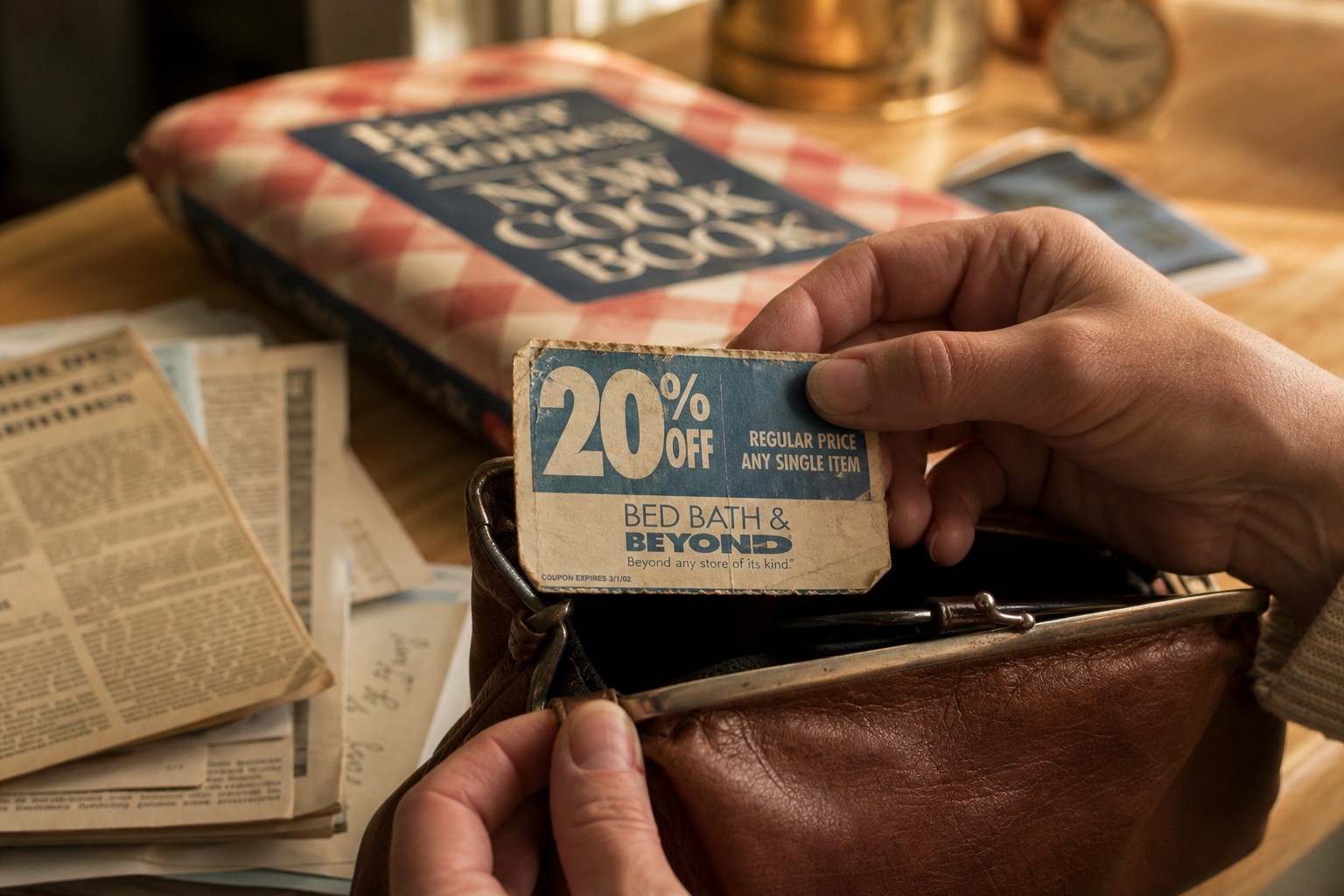
The company — which filed for Chapter 11 bankruptcy in 2023 and has since come back under new ownership — just launched one of the most clever customer engagement campaigns in recent retail history. The “Legendary Coupon Hunt” is a 21-day event running through July 13th, and the premise is dead simple: find your oldest BBB coupon, bring it to a store, and you could win a $100,000 home transformation.
Every coupon gets honored at face value. Every coupon counts as a sweepstakes entry. Expired? Faded? Older than your kid? Doesn’t matter. They’re taking them all.
And the kicker? They’re also giving away 100 gift cards worth $500 and another 50 worth $100. They partnered with iHeartMedia for a national push. They activated social creators. They went all in.
But here’s what makes this campaign genuinely brilliant — it’s not the prizes. It’s the self-awareness.
BBB knows their coupons became a cultural punchline. Everyone has one. Nobody threw them away. They arrived in your mailbox so often that “another Bed Bath & Beyond coupon” became shorthand for junk mail. There were memes. There were jokes. There was that one friend who had a stack of them in her purse at all times “just in case.”
Instead of distancing themselves from that reputation, they embraced it. They turned the joke into the campaign.
“For decades, our customers treated these coupons like treasure. They tucked them into purses, filing cabinets, cookbooks and memory boxes because they believed they would be valuable someday. We think they were right.” — Amy Sullivan, BBB President
That’s not just good copywriting. That’s a brand saying, “Yeah, we know. And we love you for it.”
Levi’s: The Cover-Up Heard Around the World
Now let’s go to Santa Clara, California — home of Levi’s Stadium, the 68,000-seat venue that hosts the San Francisco 49ers and, as of this month, 2026 FIFA World Cup matches.
Here’s the thing about the World Cup: FIFA is fiercely protective of its sponsors. Companies pay upwards of $200 million for tournament sponsorship deals, and FIFA isn’t about to let some non-sponsor get free global airtime. So they enforce a “clean venue” policy — any stadium with a commercial name from a non-sponsor has to remove or cover its branding during the tournament.
Levi’s Stadium became the “San Francisco Bay Area Stadium.” MetLife, Mercedes-Benz, Gillette, SoFi — all of them had to strip their names too.
Most brands just slapped up a blank banner and called it a day. Levi’s didn’t.
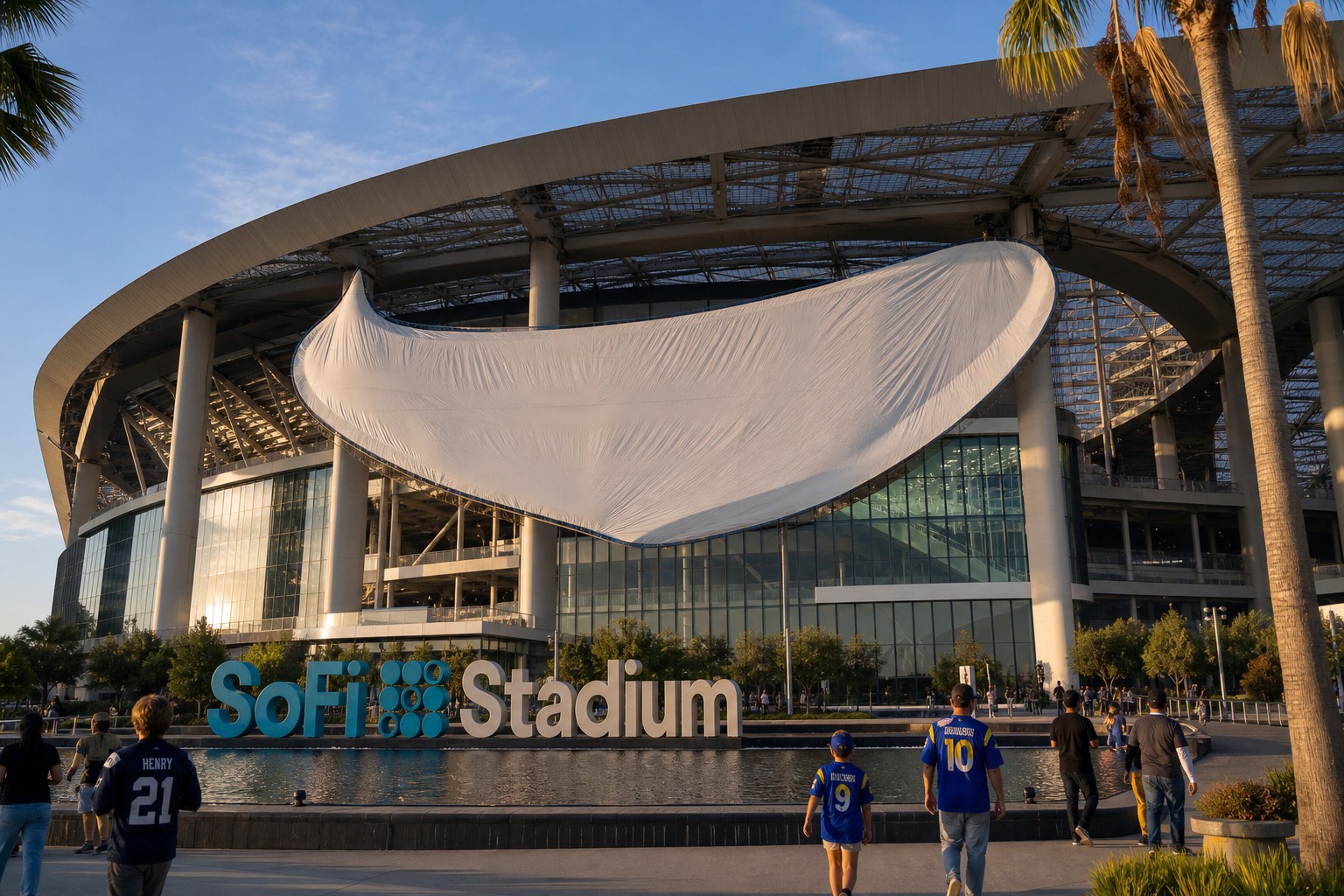
Instead, they covered their iconic batwing logo with a fitted white tarp. The name disappeared. The branding technically complied with FIFA’s rules. But the silhouette? That unmistakable shape that anyone who’s ever worn a pair of jeans would recognize? That stayed.
And then they made it a whole thing.
They posted an Instagram Reel of the covered stadium set to the viral TikTok audio “Nobody’s gonna know.” The caption read: “Welcoming the world to the beautiful [redacted] stadium.” They changed their Instagram profile picture to the covered logo. They extended the joke to Levi’s stores worldwide — Paris, London, Brazil, Mexico, Hong Kong — draping the same white covering over their storefronts.
They even started making products featuring the white-covered batwing.
The result? The most-viewed TikTok and Instagram posts in Levi’s 153-year history. Nearly half a billion media impressions. And a global conversation where millions of people voluntarily talked about Levi’s — without the brand spending a dime on official World Cup sponsorship.
All because they turned a restriction into a punchline and let the audience be in on the joke.
The Common Thread: Self-Deprecation as a Trust Builder
On the surface, these two campaigns have nothing in common. One is a retail sweepstakes about expired coupons. The other is a guerrilla branding play at a global sporting event.
But underneath, they’re running the same playbook.
Both brands acknowledged something that could be embarrassing. BBB’s coupons were a running joke. Levi’s literally had their name stripped off their own stadium. Neither situation screams “winning.”
Both brands leaned in instead of away. BBB didn’t pretend the coupon overload never happened — they made it the centerpiece of a $100,000 campaign. Levi’s didn’t quietly comply with FIFA’s rules — they turned the cover-up into content.
Both brands used self-deprecation to build connection. When a brand can laugh at itself, something shifts. The wall between “company trying to sell you something” and “brand I actually like” gets a little shorter. You stop seeing a corporation and start seeing personality. Humor. Humanity.
And that’s where trust lives.
Trust doesn’t come from polished corporate messaging. It doesn’t come from stock photos of diverse teams high-fiving in a conference room. It comes from a brand being real. Being relatable. Being the kind of voice that makes you nod and think, “Yeah, they get it.”
BBB’s campaign works because the reaction isn’t “wow, what a generous giveaway.” It’s “ha, I literally have one of those coupons in my car right now.” Levi’s works because the reaction isn’t “clever marketing strategy.” It’s “okay, that’s actually hilarious.”
Good marketing doesn’t just inform. It doesn’t just persuade. It makes you feel something. And when that feeling is warmth, humor, or recognition — that’s when trust gets built.
What Local Businesses Should Take From This
Now, you’re probably not running a national coupon sweepstakes or covering up stadium signage anytime soon. But the principles behind these campaigns? They scale all the way down to Main Street.
Here’s what local businesses should be paying attention to:
1. Lean Into What Makes You “You” — Even the Quirky Stuff
Every business has something that’s a little funny, a little awkward, or a little unique. Maybe your waiting room has had the same fish tank since 2003. Maybe your parking lot is notoriously confusing. Maybe you’re the place that’s always running five minutes behind because you actually take time with every customer.
Don’t hide that stuff. Own it. Make it part of your story. BBB didn’t run from the coupon jokes — they built a campaign around them. Your quirks are what make people remember you.
2. Be Ready to React in the Moment
Levi’s didn’t have months to plan this. FIFA’s rules were known, but the viral moment happened because they moved fast — social content, profile updates, store activations, product launches — all within days. That kind of speed comes from a team (or a marketing partner) that’s empowered to act.
For local businesses, this means your social media can’t be a once-a-week afterthought. When something happens — a trending topic, a community moment, a local event, or even something unexpected at your business — you need to be able to jump on it. The brands that react in real time are the ones that feel alive.
3. Self-Deprecation Builds More Trust Than Self-Promotion
Nobody trusts a business that only talks about how great they are. We’ve all scrolled past those posts. But a business that can poke fun at itself? That can admit a flaw? That can say “yeah, we know our hold music is terrible” with a smile? That’s a business that feels human.
Trust isn’t built through perfection. It’s built through authenticity. And sometimes authenticity looks like laughing at yourself before anyone else gets the chance to.
4. Make Your Audience Feel Like They’re In On It
Both BBB and Levi’s created campaigns where the audience wasn’t just watching — they were participating. BBB customers are digging through drawers and sharing photos of decades-old coupons. Levi’s followers are tagging friends and sharing the “nobody’s gonna know” moment. The audience became part of the story.
For local businesses, this could be as simple as a social post that says “Tag someone who ALWAYS [does that thing your customers do].” Or a behind-the-scenes video that lets people see the real, unpolished side of your business. When people feel included, they become advocates.
5. Trust Is the Real ROI
At the end of the day, both of these campaigns are trust plays. BBB is rebuilding trust after a bankruptcy. Levi’s is building goodwill without spending sponsorship dollars. Neither campaign is directly asking you to buy something right now. They’re asking you to feel something — and to remember the brand next time you do buy.
That’s the game for local businesses too. Your social media isn’t just about promoting this week’s special. It’s about building a relationship with your community so that when someone does need what you offer, you’re the first name that comes to mind.
The Bottom Line
Bed Bath & Beyond and Levi’s just gave us a masterclass in adaptive marketing. One turned a cultural punchline into a treasure hunt. The other turned a corporate setback into a global viral moment. Both made us smile. Both made us pay attention. And both reminded us that the best marketing doesn’t feel like marketing at all.
It feels like a brand you actually want to root for.
If you’re a local business wondering how to make your marketing feel less like shouting into the void and more like a conversation with your community — that’s what we do.
Let’s build something people actually want to pay attention to.
📞 585-802-1377
🌐 Brummble.com